Role: Head of Design.
On average, for its motor-taxi type service-called Ojek in Indonesia, Grab saves users’ travel time up to 36%. If it took 2 hours before to reach the office-a common travel time in Jakarta’s congested traffic, with Grab it’ll take only 1 hour 16.8 minutes. The extra 43 minutes is a precious time that anyone could use for other valuable thing in life; more time with the loved ones, more time do do things you love, more time for yourself. This is why, especially in Jakarta, services like Grab and its strongest competitor-Go-Jek, are popular. Not only transportation service, but also services like food, groceries shopping, massage, delivery service, and so on.
When I was assigned to lead the design for two teams at Grab-Growth and Food, one thing that I always pushed for, was for the team to understand users more; their needs, goals, challenges, behaviour, and context. We should be bottom-up; driven by insights from the ground to inform products. It’s even more critical since we’re designing for the next billion users who use mobile as their only computing device to do almost everything in their lives.
Deep dive into their daily lives
It’s not enough to just talk to them. You need to observe how users do things in their daily lives. When we’re thinking about improving the experience for the driver to get the job-the term used to describe incoming request to pick up a passenger, or to pick a food order, we did contextual inquiries; I and one of my team members following a driver since morning until night. We observed where he took order, how, and we did an intercept interview to dig deeper about his thoughts when he’s making a decision to accept or ignore a job.
Contextual inquiries. We observed how driver interacted with the passenger, from pick up, during the ride, and to drop off point.
Finding the core problem(s)
Getting the most important problem to solve is harder than finding the answers. User research helped a lot to define the challenge: “How might we help driver to quickly decide to take valuable job?”
We found out the importance of below information to the drivers (in order), which helped us designing a better job card that helps the driver to make an informed decision, examples:
What kind of job is this? Transport, Food or Delivery.
How much will I get?
How far is the delivery address? and so on.
Contextual inquiries. We observed on the street, how driver interacted with and accepted a job.
Designing usable and useful product
Once we had the design, we didn’t just build. We did multiple rounds of Usability Tests with the drivers, to refine design and making it more usable and useful. For example, we initially use an icon to indicate different type of services; transport, food, or delivery. But most of the drivers were not used to it. It’s not known. So instead we use text to show the service, and improve the layout to show a better visual hierarchy and information design.
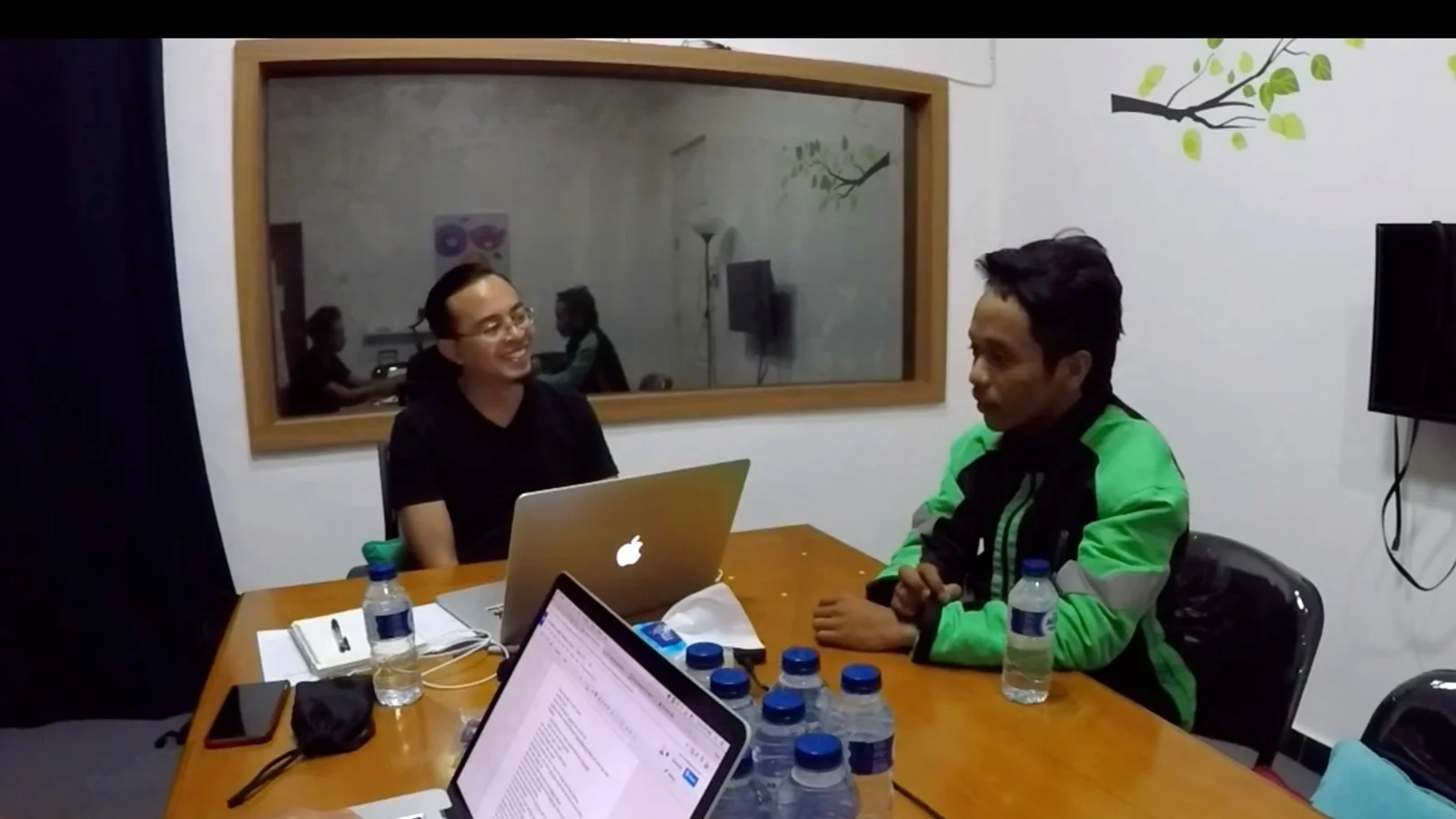
Usability Test with drivers.
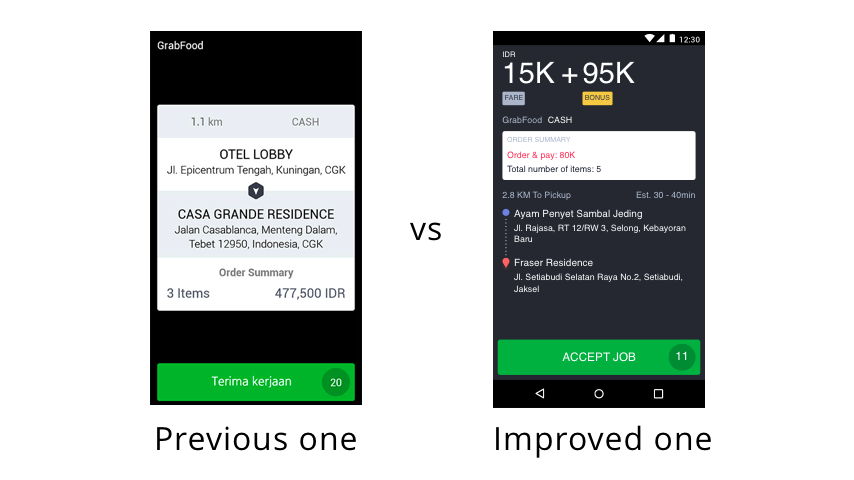
Putting it all together
Grab runs in 336 cities in 8 countries. Sometimes what we found to be true in Indonesia, is applicable in other countries too. In above case, the importance of quick decision making for the driver is critical, and we’re able to bring the learnings to other countries as well.
The mission is to provide a safe, accessible and affordable services-from transport to finance, to everyone in Southeast Asia. Insights from the ground not only help to define a better product strategy for the business, but also help to build a usable, useful and engaging products that people love.